


MIG Welders
MIG Welders, Digital Easy Setup
Our Digital MIG welders feature Easy-Set technology with colour screens to get you great welding results fast, manual mode lets you take full control with an easy to navigate screen. Ideal for the professional to increase productivity and the novice welder who wants the guesswork taken away.
With MIG welders from 180 amp to 450 amp models we have a welder to suit your needs. All R-Tech machines come with a 5 year no quibble collect & return warranty for total peace of mind. We also offer delivery on the UK mainland. Need help? Call for friendly expert advice on 01452 733933 or via website LiveChat.
All our machines come ready to weld with a MIG torch & consumables, earth lead, gas regulator & gas hose to get you welding quickly. Our range of MIG welders give you an excellent finish and a high-quality weld and are well worth exploring. We even offer 0% interest!
MIG welding machines feed the MIG wire automatically making it easier & quicker than TIG welding. The MIG181 & MIG251 inverter technology MIG welders can weld from as little as 25amps making them ideal for thin car body work and also heavy duty welds 6mm+. Ideal for home workshop, automotive repair and industrial welding


-
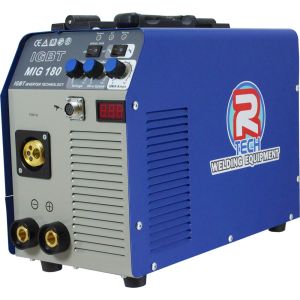
R-Tech 180 Amp Portable Inverter Mig Welder (240v)
MIG180£690.00 £575.00Looking for a MIG welder ideal for both thin automotive welding and fabrication up to 6mm on a 240v input? Our MIG180 is the ideal solution, The metal wire feed assembly and Euro MIG torch gives very consistent weld beads, Infinite adjustment for fine control of welding power & backed with our no quibble 5 year wa... 6MMSTEELALUM.SPOOL -
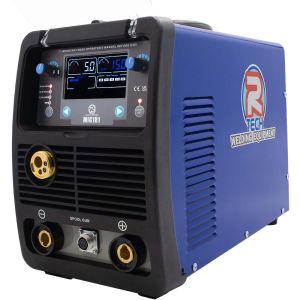
R-Tech 181 Digital MIG Welder (240v)
MIG181£834.00 £695.00Looking for an Easy to Setup MIG welder ideal for both thin automotive welding and fabrication up to 6mm on a 240v input? Our MIG181 is the ideal solution with its Easy Setup Technology - Just press 2 buttons to select wire being used and material thickness and you are welding! The metal wire feed assembly and Eur... 6MMSTEELALUM.SPOOL -
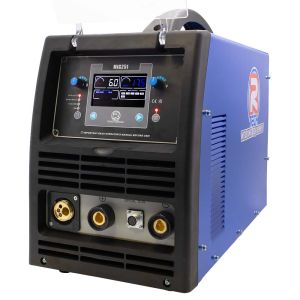
R-Tech 251 Digital Industrial MIG Welder (240v)
MIG251£1,158.00 £965.00Ideal for heavy fabrication up to 9mm and automotive welding on a 240v input. Our MIG251 is the ideal solution with its Easy Setup Technology - Just press 2 buttons to select wire being used and material thickness and you are welding! The metal wire feed assembly and Euro MIG torch gives very consistent weld beads... 9MMSTEELALUM.SPOOL -
R-Tech 321 Digital Industrial MIG Welder (415v)
MIG321£1,614.00 £1,345.00Ideal for heavy fabrication up to 11mm and automotive welding on a 415v input. Our MIG321 with its 4-roll metal wire feed assembly and Euro MIG torch gives very consistent weld beads and has infinite adjustment for fine control of the welding power. Increase productivity with Easy Setup Technology - Just press 2 b... 11MMSTEELALUM.SPOOL -
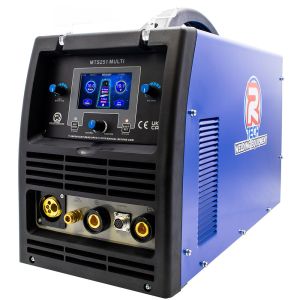
R-Tech MTS251 TFT Multi - MIG - DC TIG - MMA Welder 240V
MTS251TFT£1,494.00 £1,245.00Industry meets versatility with the MTS251. Featuring Easy Setup MIG, TIG & MMA modes. Our MTS251 with its 4-roll metal wire feed assembly and Euro MIG torch gives very consistent weld beads and has infinite adjustment for fine control of the welding power. Increase MIG productivity with Easy Setup Technology - ju... 9MMSTEELALUM.SPOOL -
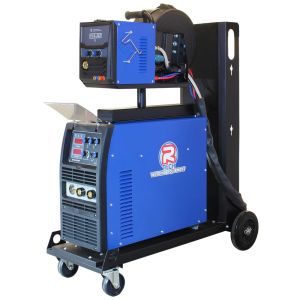
MIG Welder 450 Amp Industrial with seperate wire feed unit
MIG-MTS-450SWF£3,234.00 £2,695.00The MTS450 Inverter MIG & MMA welder features a high 60% duty cycle, Separate wire feed unit and heavy duty trolley MIG wave adjustment for fine control of welding arc, 15KG reel capacity Ideal for maintenance, automotive and heavy fabrication welding. 24MMSTEEL